How to Exhibit at a Bangladesh Expo: A First-Timer's Complete Handbook
April 23, 2026
|
exhibiting
business
booth
trade-fair
guide
<h2>Why Exhibiting Matters for Bangladesh Businesses</h2>
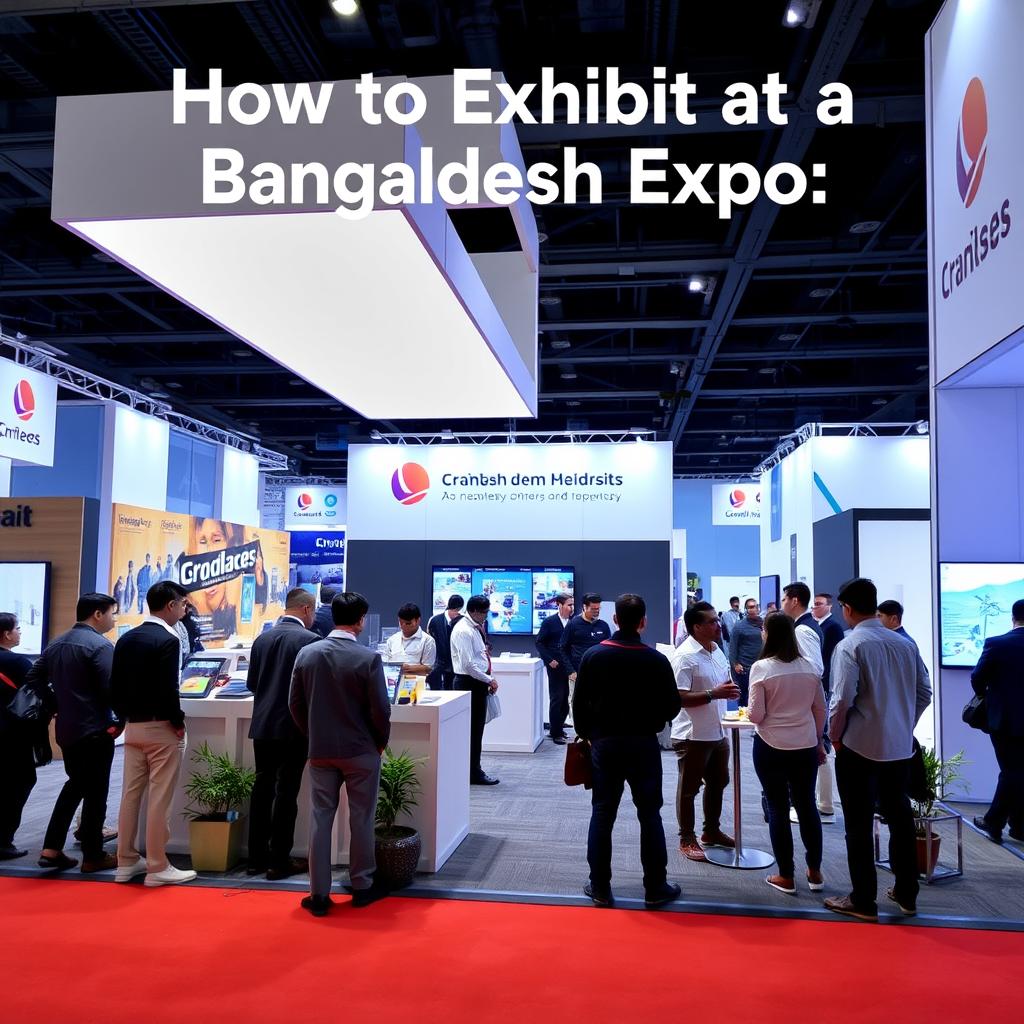
<p>For small and medium businesses in Bangladesh, exhibiting at a trade fair or expo can be transformative. In a market where personal relationships drive most B2B transactions, there's no substitute for face-to-face interaction with potential buyers, distributors, and partners. A single well-executed expo booth can generate leads that take months to develop through cold calling or digital marketing alone.</p>
<p>Consider the numbers: a mid-tier expo in Dhaka attracts 50,000-100,000 visitors over its run. Even a modest stall in a non-premium location will see 500-1,000 visitors pass by daily, of whom 50-100 will stop and engage. If just 5% of those engaged visitors convert to customers, that's 2-5 new customers per day — potentially 20-50 over a 10-day expo. For a small manufacturer or artisan producer, that volume of qualified leads is otherwise impossible to achieve affordably.</p>
<h2>Choosing the Right Expo</h2>
<p>Not every expo is right for every business. The first decision is between general trade fairs like DITF and sector-specific expos. General fairs offer maximum footfall but diluted attention — your handmade leather goods stall competes for attention with the electronics pavilion next door. Sector expos attract smaller but highly targeted audiences who are specifically looking for what you sell.</p>
<p>For consumer products — food, fashion, crafts, household goods — DITF and the SME Fair organized by SME Foundation are excellent starting points. For industrial products and B2B services, look at Textech, Build Bangladesh, or Agro Bangladesh. For technology and digital services, the ICT Expo and Digital World are better fits.</p>
<p>Research past exhibitors before committing. Contact 3-5 businesses that exhibited at the expo you're considering and ask about their experience: foot traffic, quality of leads, venue facilities, and whether they'd exhibit again. This primary research is invaluable and most exhibitors are willing to share candidly.</p>
<h2>Budgeting for Your First Expo</h2>
<p>The stall rental is just the beginning — typically 30-40% of your total expo budget. Here's a realistic budget breakdown for a standard 9-square-meter stall at a mid-tier Dhaka expo.</p>
<p>Stall rental ranges from ৳50,000 to ৳200,000 depending on the expo, location within the venue, and whether it's a shell scheme with basic walls and electricity or a raw space you need to build out. Corner stalls cost 20-30% more but get foot traffic from two aisles. Premium locations near entrances, food courts, or anchor pavilions cost 40-50% more.</p>
<p>Stall design and construction typically costs ৳30,000-80,000 for a professional-looking booth. This includes wall panels, lighting, display shelving, signage, and branding. You can save by using a shell scheme stall and adding just your branding, or spend more on a custom-built booth that makes a stronger visual impression. Companies like Artisan Display and Event Plus in Dhaka specialize in expo booth construction.</p>
<p>Marketing materials — banners, brochures, business cards, product catalogs, and giveaways — add another ৳15,000-40,000. Don't skimp on print quality; a cheap, blurry brochure undermines the professional image you're trying to build. Budget ৳5,000-8,000 for a set of 500 quality brochures from a Banani or Gulshan print shop.</p>
<p>Staffing costs include travel, meals, and accommodation for your team. Budget ৳500-800 per person per day for meals and transport within Dhaka, more if your team is traveling from outside the capital. Plan for 2-3 staff per shift, with shifts of 4-5 hours each to prevent fatigue that leads to poor engagement with visitors.</p>
<h2>Designing Your Booth for Impact</h2>
<p>You have approximately 3 seconds to catch a passing visitor's attention. Your booth design needs to communicate three things instantly: who you are, what you sell, and why they should stop. A clear, large company name and tagline at eye level or above is essential. Product displays should be at waist-to-eye height for easy viewing. Lighting should highlight your products, not just illuminate the space.</p>
<p>The biggest design mistake first-time exhibitors make is cluttering the booth. Resist the urge to display every product you make. Choose 5-7 hero products that represent your range and showcase them with space to breathe. A focused display looks professional and invites engagement; a crowded table looks like a bazaar stall.</p>
<p>Consider the visitor flow through your booth. Create an open entrance that doesn't require visitors to commit to entering — no walls or counters blocking the front. Place eye-catching products at the front to draw people in, interactive elements or demonstrations in the middle, and your sales counter at the back where conversations happen naturally.</p>
<h2>Staff Training: Your Most Important Investment</h2>
<p>Your booth staff are the single biggest factor in expo success. A beautiful booth with disengaged staff is a waste of money. Train your team on three things: product knowledge (they should be able to answer any question without checking notes), engagement technique (how to greet visitors, qualify interest, and start conversations), and lead capture (collecting contact information from interested visitors).</p>
<p>In Bangladesh, warm, personal engagement works better than aggressive selling. Train staff to greet with "আসসালামু আলাইকুম" or a friendly nod, let visitors browse for 10-15 seconds, then approach with an open question: "কোন ধরনের পণ্য খুঁজছেন?" (What type of product are you looking for?) rather than "Can I help you?" which invites a quick "no." Staff should be standing, not sitting — a seated booth attendant signals disinterest and discourages visitors from stopping.</p>
<p>Assign roles clearly: one person as the greeter who draws visitors in, one as the product expert who handles detailed questions, and one managing the sales counter and lead capture. Rotate roles every 2-3 hours to keep energy high. Provide water, snacks, and short breaks — tired staff give tired performances.</p>
<h2>After the Expo: Converting Leads</h2>
<p>The expo ends, but the real work begins. Most exhibitors collect 100-300 leads during a 10-day fair. The critical window for follow-up is 48-72 hours after the expo closes. After that, visitors' memories fade, their collected brochures get filed away, and the momentum is lost.</p>
<p>Sort your leads into three categories immediately: hot leads who expressed strong buying intent or requested quotes, warm leads who showed genuine interest but didn't commit, and cold leads who just took a brochure. Call hot leads within 24 hours. Send warm leads a personalized WhatsApp message within 48 hours referencing your expo conversation. Add cold leads to your email newsletter if they consented.</p>
<p>Track your conversion rate religiously. If you spent ৳300,000 total on the expo and generated ৳1,500,000 in confirmed orders within 3 months, your return on investment is 5x — excellent by any standard. If you broke even or lost money, analyze why: was it the wrong expo, poor booth location, weak staff performance, or insufficient follow-up? Use these insights to decide whether to exhibit again and what to improve.</p>
<p>For small and medium businesses in Bangladesh, exhibiting at a trade fair or expo can be transformative. In a market where personal relationships drive most B2B transactions, there's no substitute for face-to-face interaction with potential buyers, distributors, and partners. A single well-executed expo booth can generate leads that take months to develop through cold calling or digital marketing alone.</p>
<p>Consider the numbers: a mid-tier expo in Dhaka attracts 50,000-100,000 visitors over its run. Even a modest stall in a non-premium location will see 500-1,000 visitors pass by daily, of whom 50-100 will stop and engage. If just 5% of those engaged visitors convert to customers, that's 2-5 new customers per day — potentially 20-50 over a 10-day expo. For a small manufacturer or artisan producer, that volume of qualified leads is otherwise impossible to achieve affordably.</p>
<h2>Choosing the Right Expo</h2>
<p>Not every expo is right for every business. The first decision is between general trade fairs like DITF and sector-specific expos. General fairs offer maximum footfall but diluted attention — your handmade leather goods stall competes for attention with the electronics pavilion next door. Sector expos attract smaller but highly targeted audiences who are specifically looking for what you sell.</p>
<p>For consumer products — food, fashion, crafts, household goods — DITF and the SME Fair organized by SME Foundation are excellent starting points. For industrial products and B2B services, look at Textech, Build Bangladesh, or Agro Bangladesh. For technology and digital services, the ICT Expo and Digital World are better fits.</p>
<p>Research past exhibitors before committing. Contact 3-5 businesses that exhibited at the expo you're considering and ask about their experience: foot traffic, quality of leads, venue facilities, and whether they'd exhibit again. This primary research is invaluable and most exhibitors are willing to share candidly.</p>
<h2>Budgeting for Your First Expo</h2>
<p>The stall rental is just the beginning — typically 30-40% of your total expo budget. Here's a realistic budget breakdown for a standard 9-square-meter stall at a mid-tier Dhaka expo.</p>
<p>Stall rental ranges from ৳50,000 to ৳200,000 depending on the expo, location within the venue, and whether it's a shell scheme with basic walls and electricity or a raw space you need to build out. Corner stalls cost 20-30% more but get foot traffic from two aisles. Premium locations near entrances, food courts, or anchor pavilions cost 40-50% more.</p>
<p>Stall design and construction typically costs ৳30,000-80,000 for a professional-looking booth. This includes wall panels, lighting, display shelving, signage, and branding. You can save by using a shell scheme stall and adding just your branding, or spend more on a custom-built booth that makes a stronger visual impression. Companies like Artisan Display and Event Plus in Dhaka specialize in expo booth construction.</p>
<p>Marketing materials — banners, brochures, business cards, product catalogs, and giveaways — add another ৳15,000-40,000. Don't skimp on print quality; a cheap, blurry brochure undermines the professional image you're trying to build. Budget ৳5,000-8,000 for a set of 500 quality brochures from a Banani or Gulshan print shop.</p>
<p>Staffing costs include travel, meals, and accommodation for your team. Budget ৳500-800 per person per day for meals and transport within Dhaka, more if your team is traveling from outside the capital. Plan for 2-3 staff per shift, with shifts of 4-5 hours each to prevent fatigue that leads to poor engagement with visitors.</p>
<h2>Designing Your Booth for Impact</h2>
<p>You have approximately 3 seconds to catch a passing visitor's attention. Your booth design needs to communicate three things instantly: who you are, what you sell, and why they should stop. A clear, large company name and tagline at eye level or above is essential. Product displays should be at waist-to-eye height for easy viewing. Lighting should highlight your products, not just illuminate the space.</p>
<p>The biggest design mistake first-time exhibitors make is cluttering the booth. Resist the urge to display every product you make. Choose 5-7 hero products that represent your range and showcase them with space to breathe. A focused display looks professional and invites engagement; a crowded table looks like a bazaar stall.</p>
<p>Consider the visitor flow through your booth. Create an open entrance that doesn't require visitors to commit to entering — no walls or counters blocking the front. Place eye-catching products at the front to draw people in, interactive elements or demonstrations in the middle, and your sales counter at the back where conversations happen naturally.</p>
<h2>Staff Training: Your Most Important Investment</h2>
<p>Your booth staff are the single biggest factor in expo success. A beautiful booth with disengaged staff is a waste of money. Train your team on three things: product knowledge (they should be able to answer any question without checking notes), engagement technique (how to greet visitors, qualify interest, and start conversations), and lead capture (collecting contact information from interested visitors).</p>
<p>In Bangladesh, warm, personal engagement works better than aggressive selling. Train staff to greet with "আসসালামু আলাইকুম" or a friendly nod, let visitors browse for 10-15 seconds, then approach with an open question: "কোন ধরনের পণ্য খুঁজছেন?" (What type of product are you looking for?) rather than "Can I help you?" which invites a quick "no." Staff should be standing, not sitting — a seated booth attendant signals disinterest and discourages visitors from stopping.</p>
<p>Assign roles clearly: one person as the greeter who draws visitors in, one as the product expert who handles detailed questions, and one managing the sales counter and lead capture. Rotate roles every 2-3 hours to keep energy high. Provide water, snacks, and short breaks — tired staff give tired performances.</p>
<h2>After the Expo: Converting Leads</h2>
<p>The expo ends, but the real work begins. Most exhibitors collect 100-300 leads during a 10-day fair. The critical window for follow-up is 48-72 hours after the expo closes. After that, visitors' memories fade, their collected brochures get filed away, and the momentum is lost.</p>
<p>Sort your leads into three categories immediately: hot leads who expressed strong buying intent or requested quotes, warm leads who showed genuine interest but didn't commit, and cold leads who just took a brochure. Call hot leads within 24 hours. Send warm leads a personalized WhatsApp message within 48 hours referencing your expo conversation. Add cold leads to your email newsletter if they consented.</p>
<p>Track your conversion rate religiously. If you spent ৳300,000 total on the expo and generated ৳1,500,000 in confirmed orders within 3 months, your return on investment is 5x — excellent by any standard. If you broke even or lost money, analyze why: was it the wrong expo, poor booth location, weak staff performance, or insufficient follow-up? Use these insights to decide whether to exhibit again and what to improve.</p>
